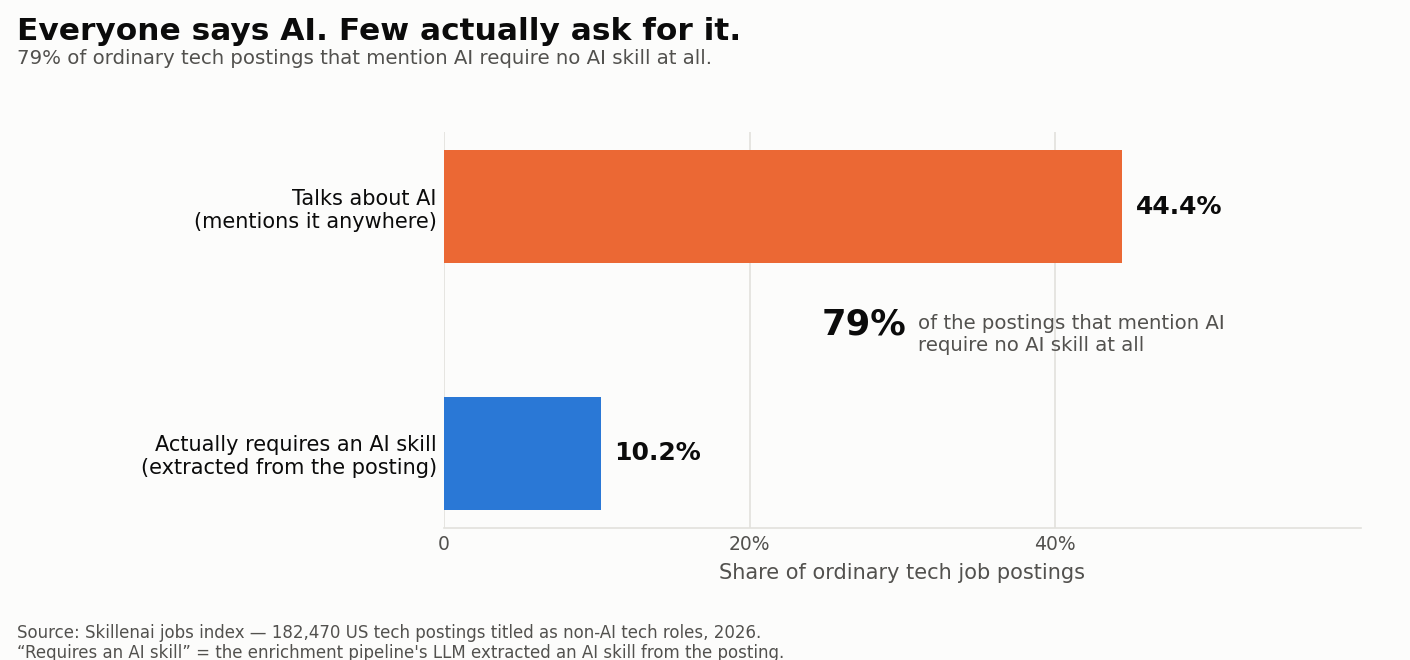
Every company wants to be an AI company. Far fewer want to hire for it. We measured 182,470 job postings and 568,663 tech CVs: employers mention AI four times more often than they ask for it.
August 28, 2026
77 posts

Every company wants to be an AI company. Far fewer want to hire for it. We measured 182,470 job postings and 568,663 tech CVs: employers mention AI four times more often than they ask for it.
August 28, 2026

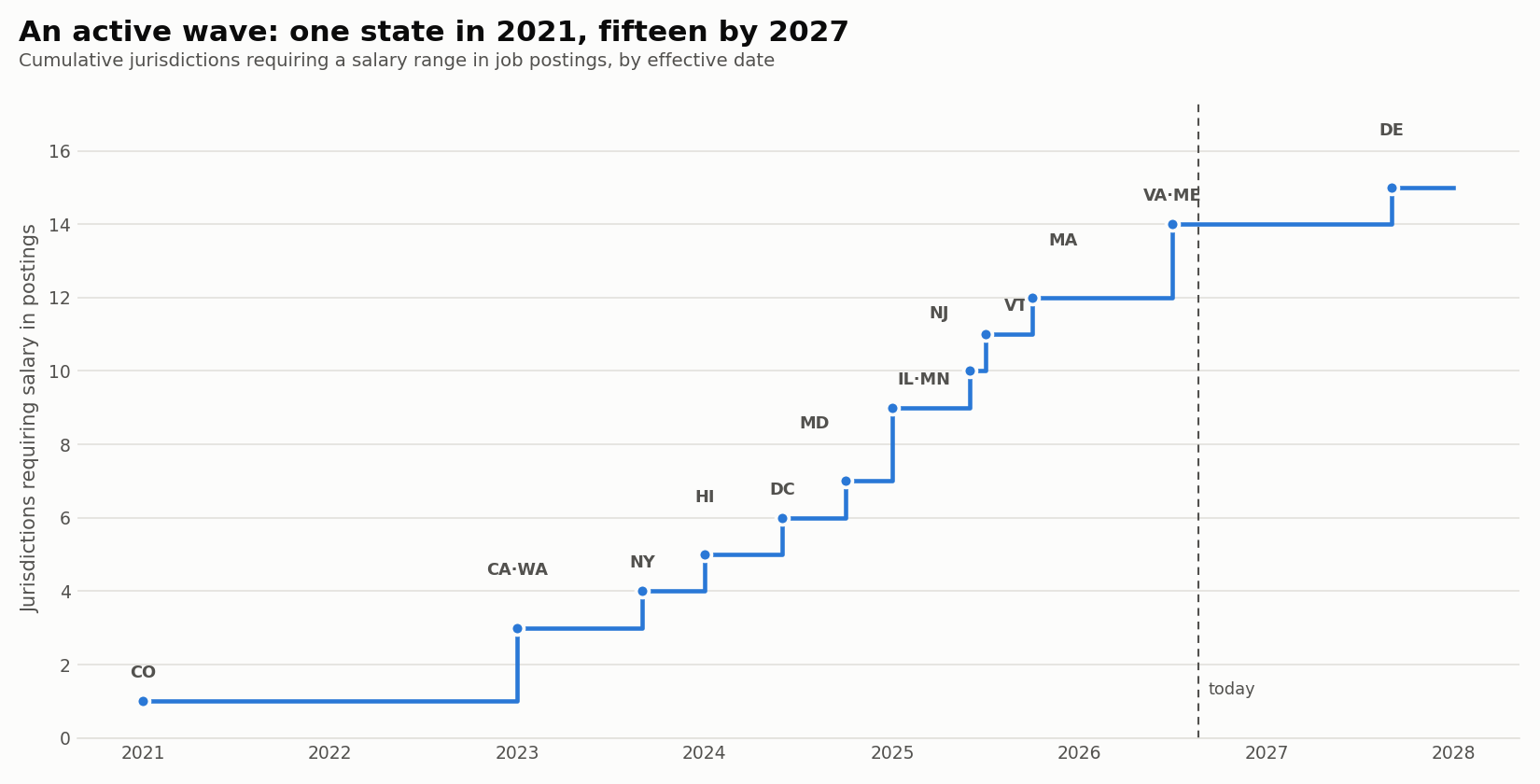
In Washington, 47% of job postings show the salary. In Kansas, 5.3% do. We measured salary disclosure across 118,706 US job postings and 38 states — and found that even where the law requires pay in the posting, roughly half still don't show it.
August 21, 2026

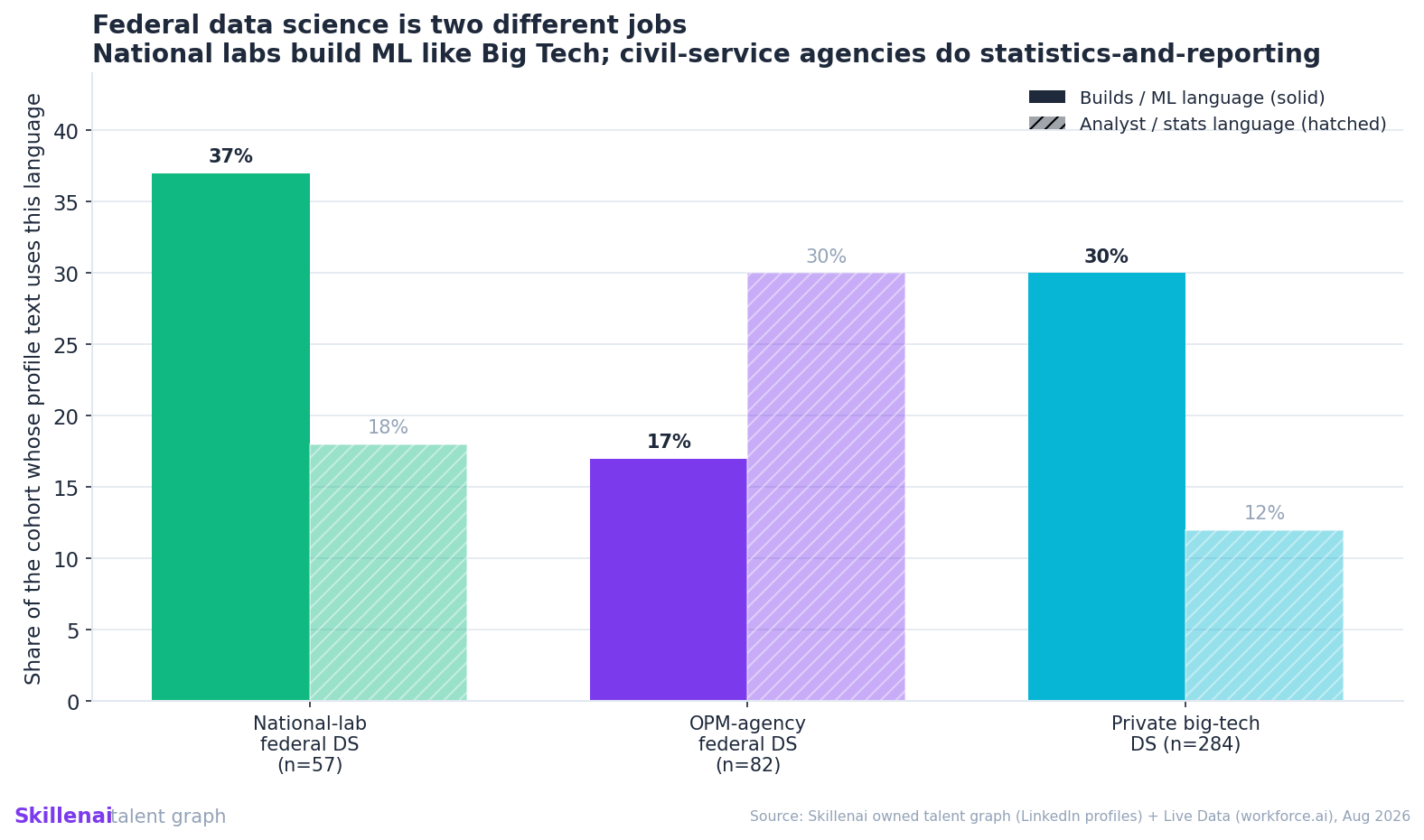
Read the people, not the postings: national-lab data scientists build ML like Big Tech, while civil-service agency data scientists do statistics-and-reporting. Two different jobs under one title — and neither ever touches frontier tech.
August 15, 2026

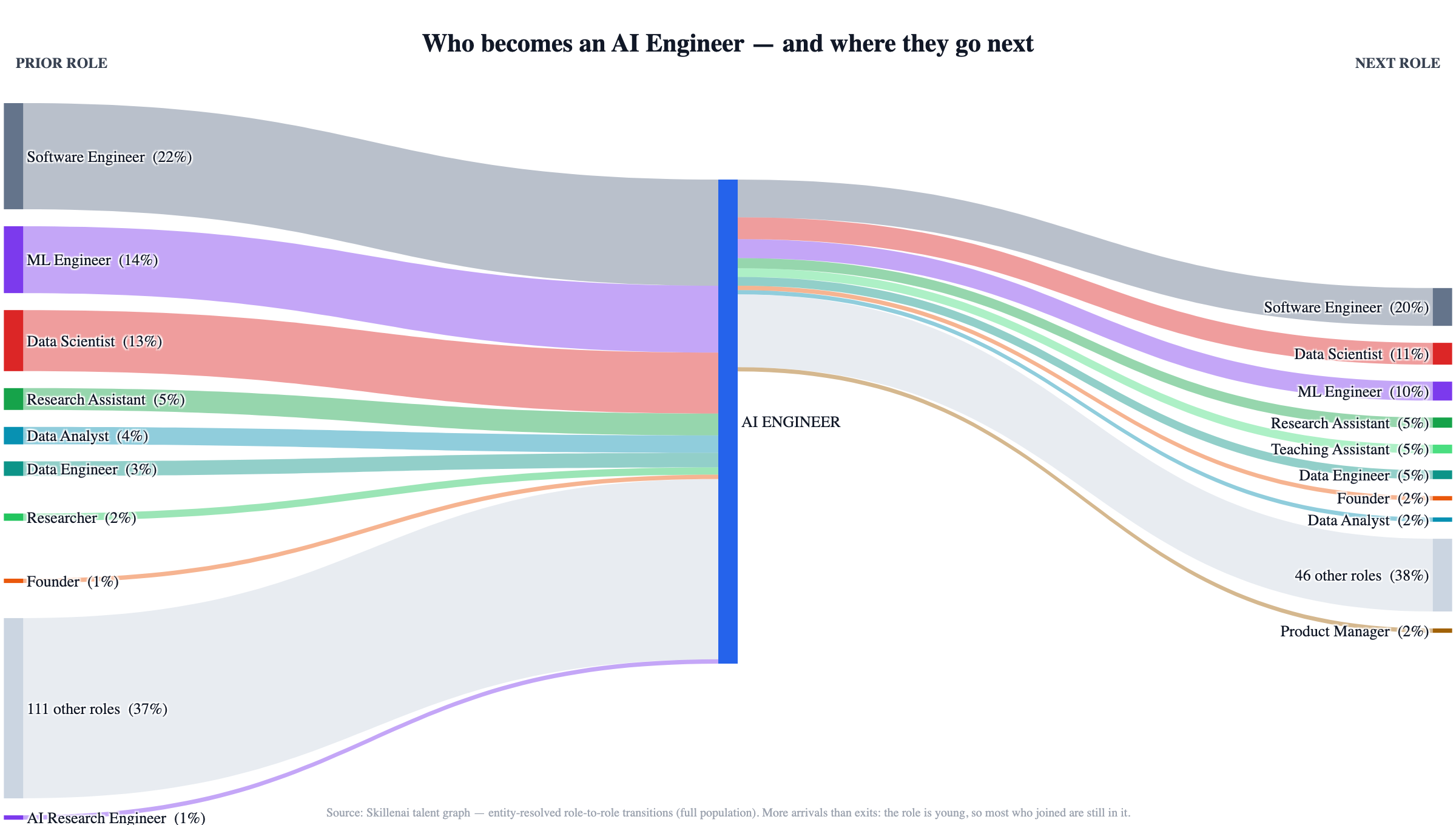
We mapped the AI Engineer role from both sides — Skillenai's talent graph and job postings. Who feeds it, where they go next, and why the skills employers ask for don't match what workers list.
August 11, 2026

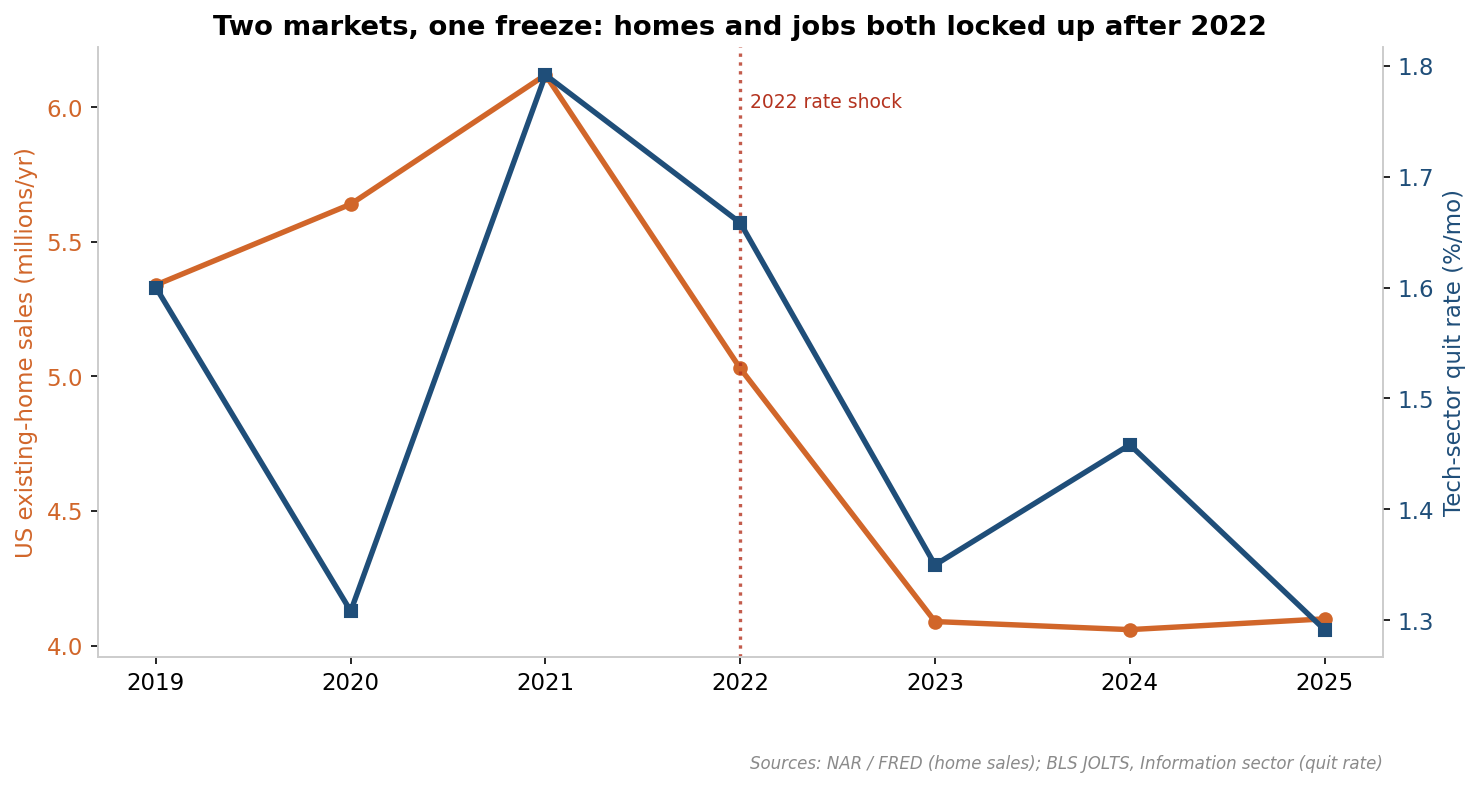
AI didn't torch the junior job market. A frozen labor market did — and the housing market, frozen by the same 2022 rate shock with zero AI, is the control group that proves it.
August 5, 2026

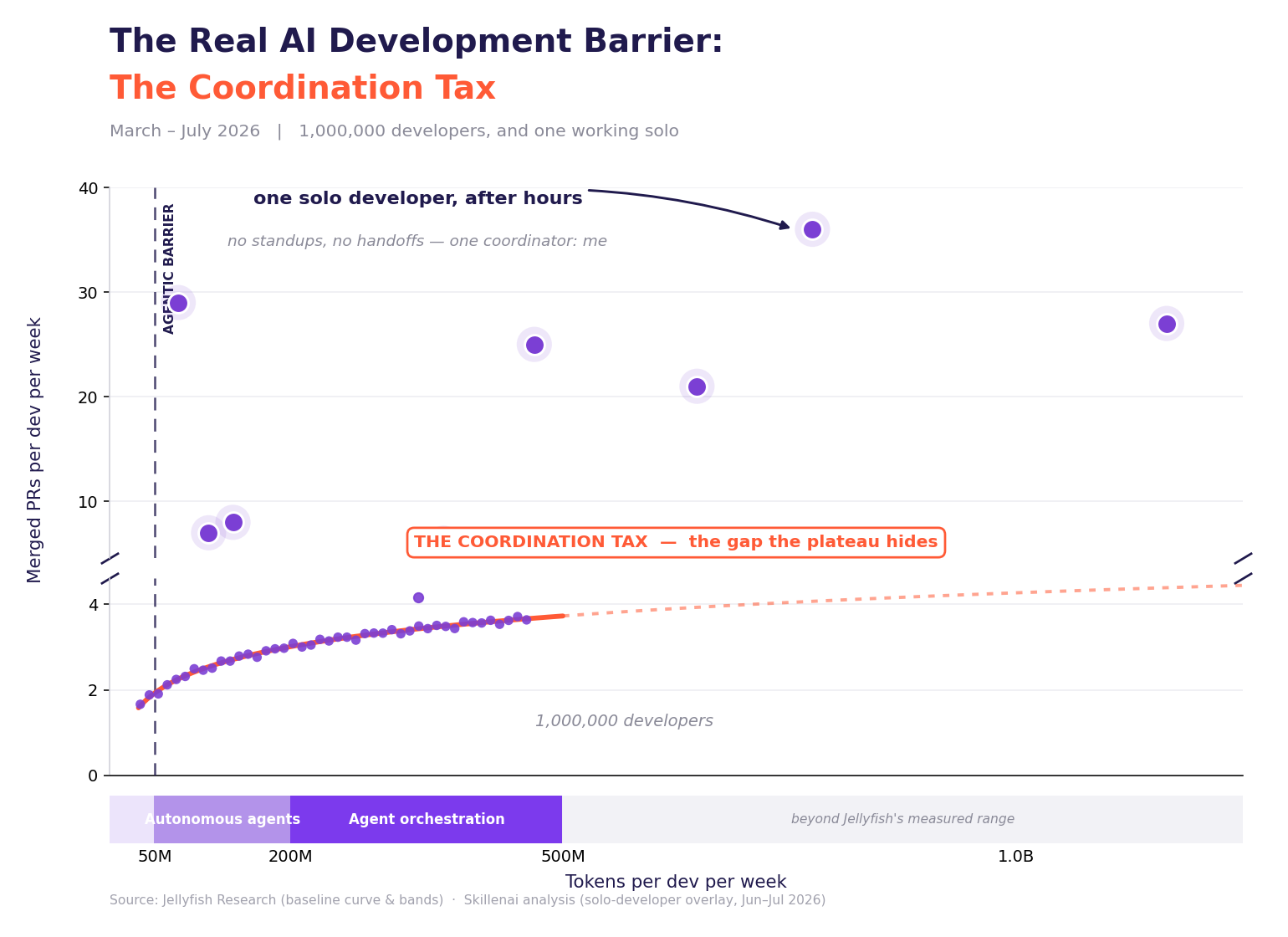
Jellyfish says AI dev output plateaus around 4 merged PRs a week. Running Claude Code agents solo, after hours, I've been doing 23. The plateau isn't a token wall — it's the Coordination Tax.
July 24, 2026

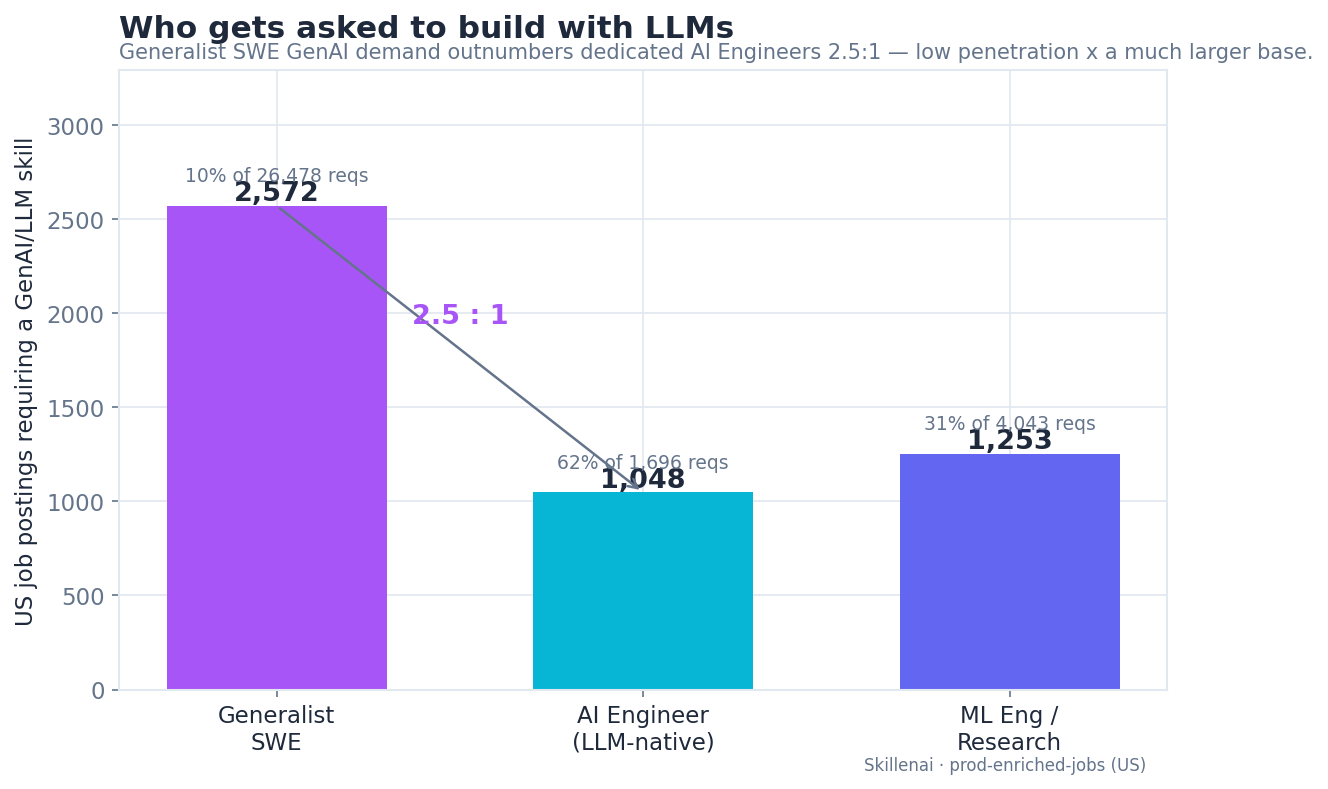
US employers ask 2.5x more generalist software engineers than AI engineers to build with LLMs, and the generalists do it in TypeScript and Ruby, without LangGraph. A demand-side look at who really builds AI.
July 22, 2026

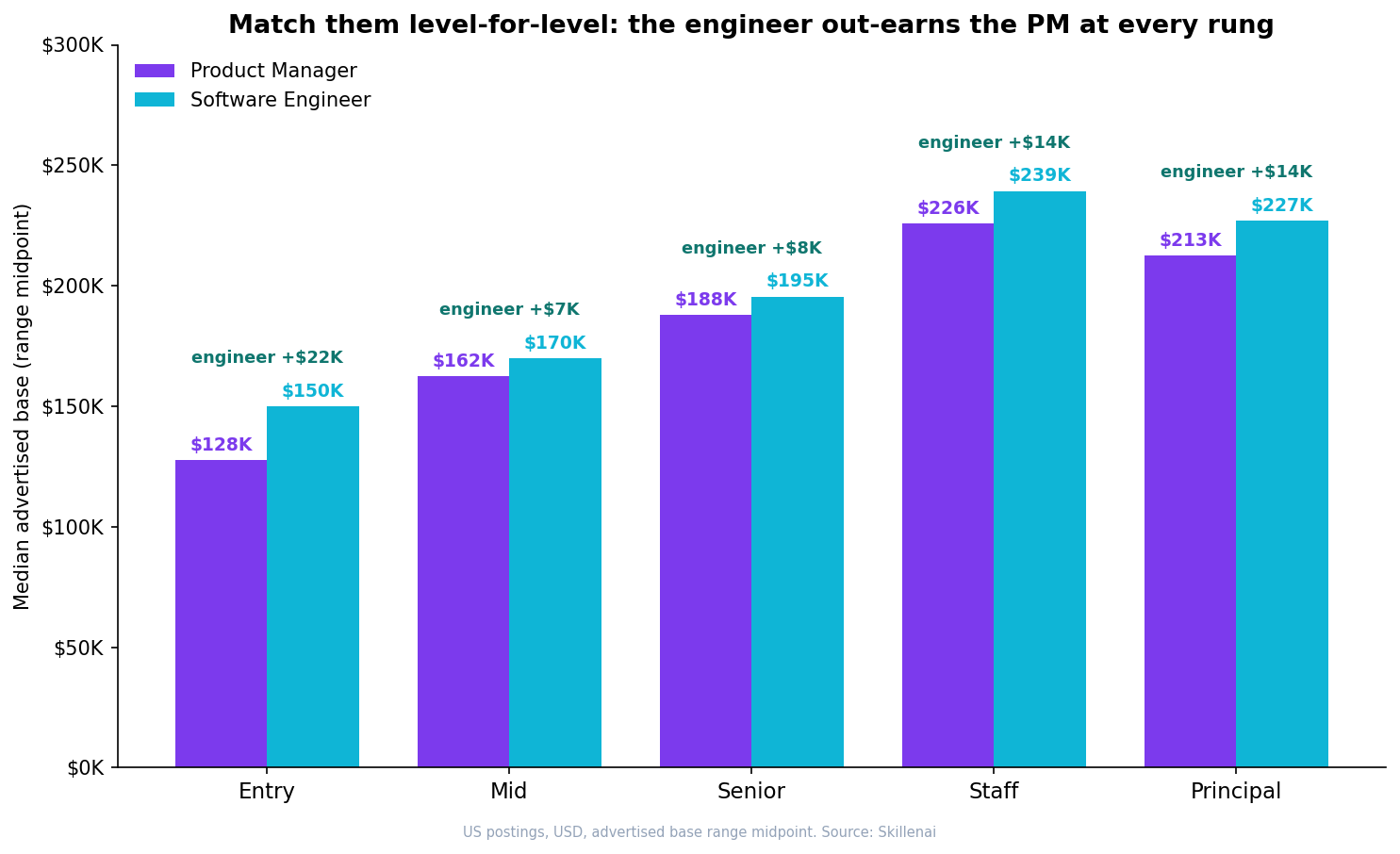
A viral Levels.fyi post says the median PM out-earns the median engineer. Across the open job market, that gap is a spam artifact plus a composition effect — match them rung-for-rung and the engineer wins every level.
July 11, 2026

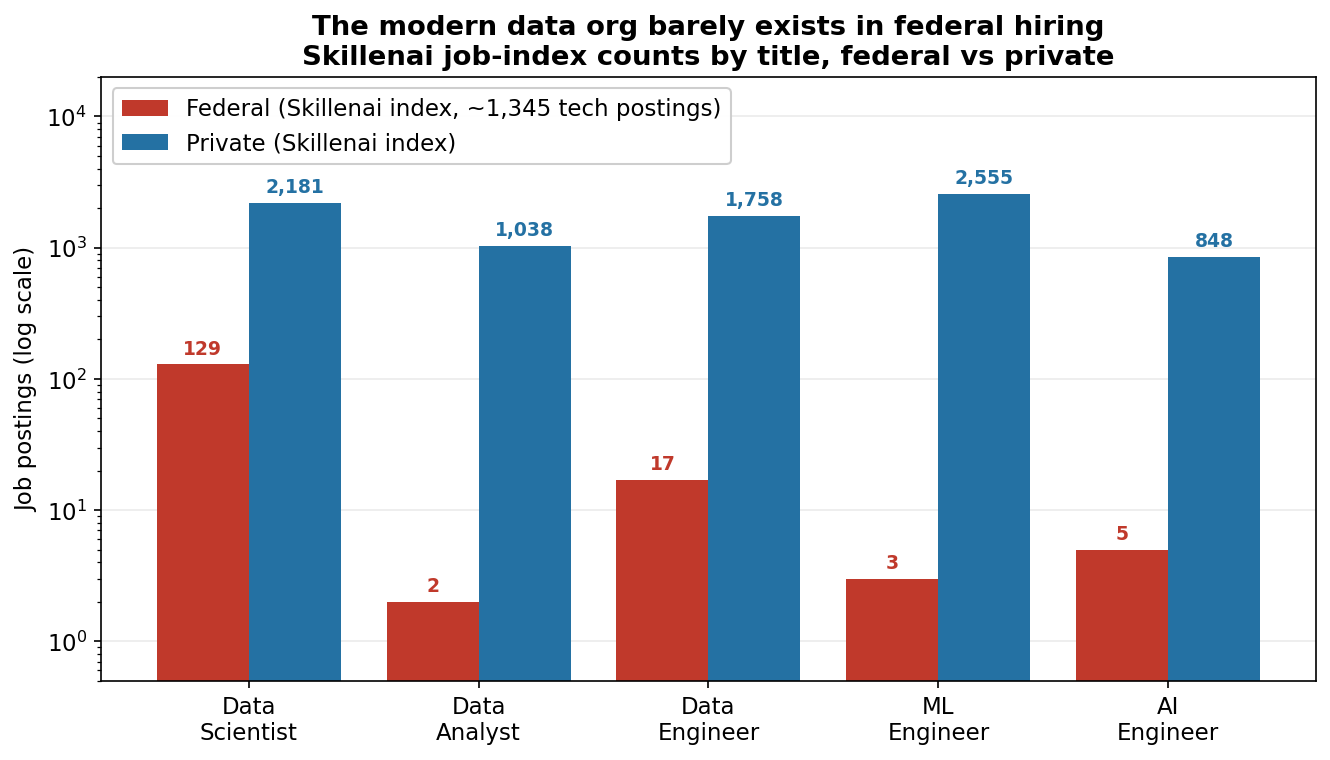
Under identical titles, federal and private tech postings ask for different tools — a federal Data Scientist does statistics and reporting where a private one ships Python and experiments — and several modern data roles barely exist as federal jobs.
July 7, 2026

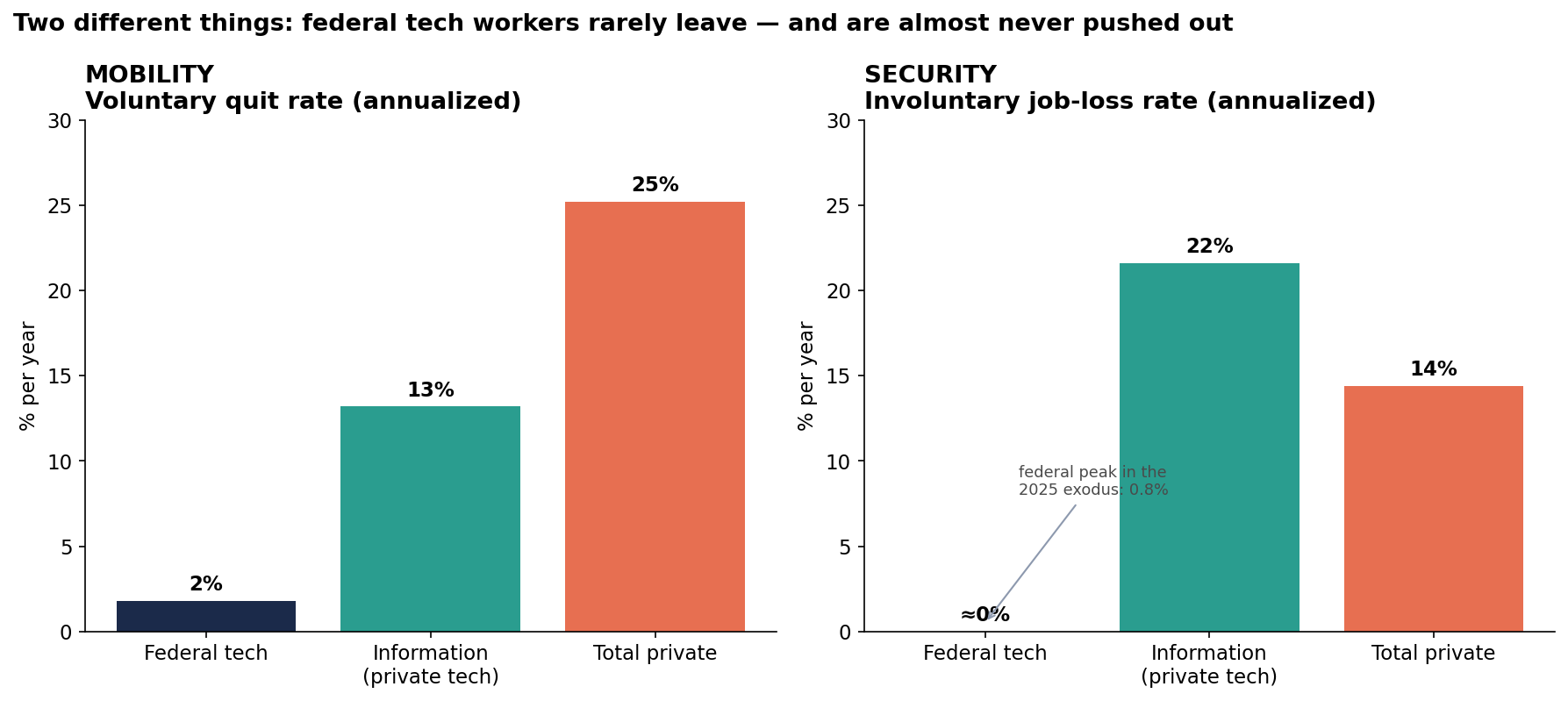
Federal tech jobs pay ~20% less than private — a gap that should drive workers out but doesn't. Using the new OPM workforce API, the Skillenai job index, and BLS, we price the public-sector bargain: near-zero mobility, near-total job security, and a pension that ties them together.
July 3, 2026